 SEGLY
SEGLY
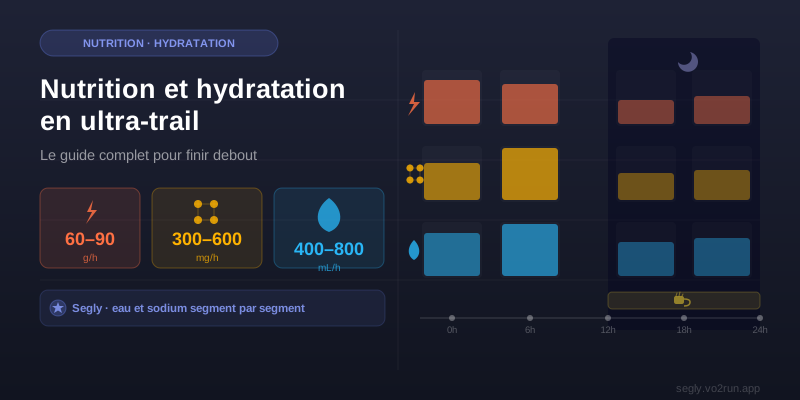
Have you ever spent time at a aid station wondering whether you should eat or just drink? Or finished a race with cramps that you could have avoided by managing your sodium intake better? Nutrition in ultra-trail running is one of the most overlooked factors, and yet it’s one of the key differences between finishing on your feet and collapsing at the 60 km mark.
This guide isn’t theoretical. It’s based on practical, field-tested principles that you can incorporate into your next training plan.
Why Nutrition Really Makes the Difference in Ultra Races
In a 20- to 40-hour ultra, your body will burn between 500 and 900 kcal per hour, depending on the intensity. You’ll never be able to fully make up for this deficit—but runners who finish, and finish well, consume an average of 250 to 300 kcal per hour thanks to a clear, tested nutrition strategy tailored to their needs.
It’s not a matter of willpower. It’s a matter of planning.
Carbohydrates: The Main Fuel
How much should you aim for?
Carbohydrates are your fuel for high-intensity effort: they’re quickly mobilized and essential for maintaining pace, mental clarity, and coordination. The target recommended by the International Society of Sports Nutrition is 60 to 90 g of carbohydrates per hour during an ultra.
In practice:
- Below 60 g/h, you risk running out of energy on technical sections
- Above 60 g/h, a glucose/fructose blend is essential to maximize intestinal absorption and minimize digestive issues
- At night, aim for 40 to 50 g/h instead—your metabolism slows down, and digestion becomes more delicate
Vary your sources—don’t just rely on gels
Gels work well for the first few hours. But after 8, 10, or 15 hours of exertion, you may start to feel sick of them. The most effective strategy: vary textures and flavors from the start, not just when the sweetness becomes unbearable.
- Liquid and semi-liquid (gels, fruit compotes, purees): 2/3 of your intake, easy to digest
- Solid (bars, dates, bananas, bread + jam): 1/3 of your intake, to be introduced halfway through the race
- Salty (chips, broth, sandwiches): Introduce gradually starting halfway through the race to maintain your appetite and replenish sodium
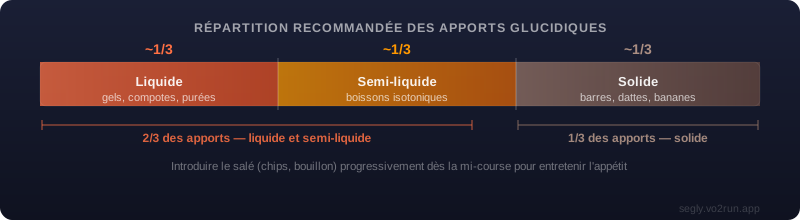
Recommended breakdown of carbohydrate intake: 2/3 from liquid and semi-liquid sources, 1/3 from solids. This variety reduces the risk of feeling sick in the second half of the race.
Sodium: The Electrolyte Everyone Underestimates
Why it’s critical
Sodium is the electrolyte lost most rapidly through sweat. A sodium deficiency during an ultra can cause cramps, accelerated fatigue, and in extreme cases, hyponatremia (dilution of sodium in the blood), which is a genuine medical emergency.
Drinking lots of plain water without replenishing sodium makes the problem worse. This is the most common mistake in hot weather: people drink, but they don’t replenish their electrolytes.
How much should you aim for?
The recommended range is 300 to 600 mg of sodium per hour under normal conditions. But this figure increases significantly in hot weather:
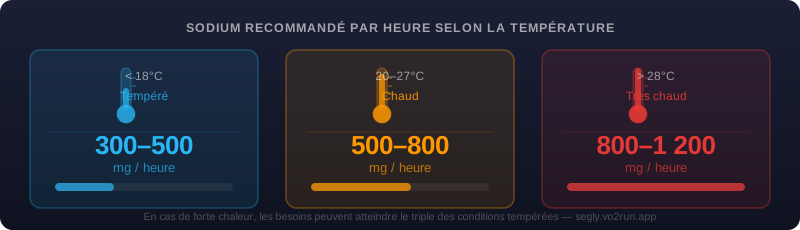
Sodium requirements can vary by as much as threefold depending on the temperature. In very hot weather, ignoring these intake needs can lead to hyponatremia, a genuine medical emergency.
Practical Sources of Sodium During a Race
- Isotonic drinks
- Salt tablets (convenient, precisely measured)
- Hot broth at aid stations (effective at night and at high altitudes)
- Chips, olives, and cheese at aid stations
- Uncapped Coke (carbs + sodium + caffeine + anti-nausea effect)
Water: Drink smart, not just a lot
Frequency matters just as much as quantity
The general goal is 400 to 800 mL per hour, depending on the heat and how much you’re sweating. But frequency is just as important as quantity: taking small sips every 15 to 20 minutes is better than drinking a large amount at a refreshment station.
Rule of thumb: Start drinking within the first few minutes of the race, without waiting until you’re thirsty. In an ultra, the sensation of thirst often lags behind actual dehydration.
The Impact of Heat
Heat is the factor that causes the greatest variation in fluid needs. On a course with wide temperature fluctuations—such as a mountain trail where you go from 7°C at high altitude to 26°C at the finish—your fluid needs can nearly double between the cool and hot sections.
One often-overlooked point: at night, even though you’re not as hot, fluid loss remains significant—especially on ultras with a lot of elevation gain. The impression that you’re sweating less is misleading.
On Segly: water and sodium requirements are automatically calculated segment by segment based on the forecast weather along your route. You no longer have to guess—the recommendations adapt to the actual temperature of each section of your race. Import your GPX track →
Caffeine: Use Your Secret Weapon Wisely
Caffeine is the only scientifically validated ergogenic aid for improving endurance performance. It enhances alertness, delays mental fatigue, and can be a significant help during night runs.
But it must be managed with precision:
- Dosage: 3 to 6 mg/kg of body weight per dose
- Timing: Save it for the second half of the race—or even just for the night if you’re planning to run for two nights
- Form: caffeinated gels, tablets, coffee at aid stations, Coca-Cola
- Test it out: Be sure to try it during training before race day to check for digestive tolerance
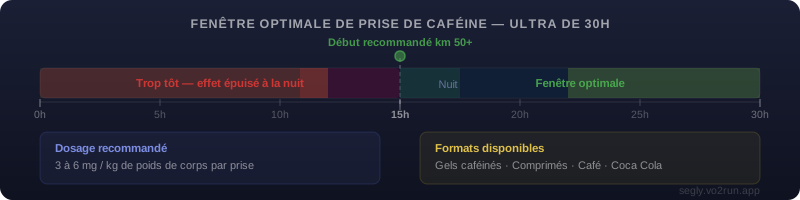
Caffeine should be reserved for the second half of the race, ideally starting in the early hours of the night. Taking it too early wears off just when you need it most.
The 5 Most Common Mistakes
- Eating only when you’re hungry. The feeling of hunger often disappears during exercise. Setting an alarm every 30 minutes is a simple and effective solution.
- Testing your nutrition only during the race. Digestive tolerance can be trained. An 8- to 12-week “gut training” program before the race allows you to gradually increase the amounts your digestive system can absorb without issues.
- Ignoring sodium in hot weather. When temperatures exceed 28°C, sodium requirements can double. Filling your water bottles without adding electrolytes is a mistake with immediate consequences.
- Making your drinks too concentrated. A drink that’s too concentrated causes nausea and a heavy feeling in the stomach. In hot weather, dilute your drinks more and increase the frequency of sips rather than the concentration.
- Planning everything based on the same strategy from start to finish. Needs vary greatly depending on the segment, the weather, and the time of day. A one-size-fits-all plan for 30 hours fails to account for the realities on the ground.
Plan segment by segment: the real change
Most nutrition advice provides general averages. But in ultra-running, a downhill segment at 15°C and an uphill segment at 28°C in direct sunlight have different needs—in terms of water, sodium, and the timing of intake.
Planning your nutrition segment by segment, factoring in the forecast and the duration of each segment, is what takes you from a rough strategy to true preparation.
With Segly: you enter your carbohydrate and caffeine goals, and Segly automatically calculates your water and sodium needs segment by segment based on the weather forecast for your route. Each segment has its own recommendations, tailored to the duration, temperature, and elevation gain. You arrive at the aid station with a precise plan, not a guess.
Conclusion
Nutrition in ultra-trails isn’t an exact science—every runner is different, and what works for one may not work for another. But the core principles are sound: maintain a steady carbohydrate intake, manage sodium based on the heat, hydrate before you get thirsty, and use caffeine strategically.
What makes all the difference is having a plan. Not an overall average, but clear goals for each segment of your race—tailored to the weather, duration, and terrain.
Segly automatically calculates your water and sodium needs segment by segment based on the forecast for your route. You enter your carbohydrate and caffeine goals, and Segly handles the rest. Import your GPX track and prepare for your next ultra →