 SEGLY
SEGLY
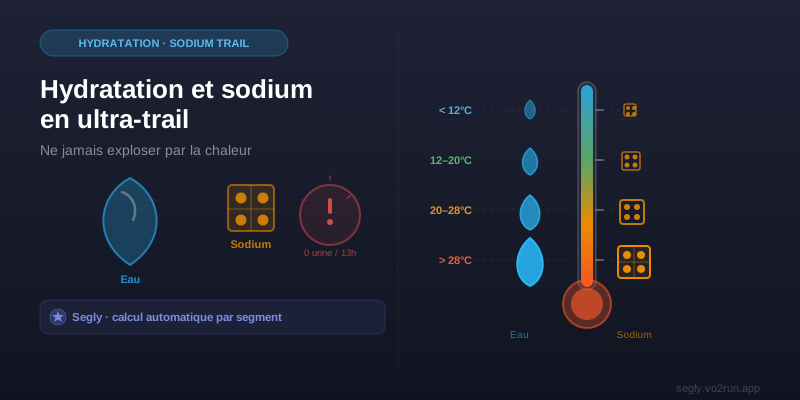
A runner told me after a mountain trail run in 30°C heat: thirteen hours of running, no urine. Not even once. He thought he was well-hydrated because he was drinking regularly. It wasn’t until the next day, when he was experiencing intense muscle pain and unusual fatigue, that he realized what had happened. He hadn’t drunk too much—he’d sweated profusely without replenishing enough water or, more importantly, sodium. His body had simply turned off the tap: his kidneys went into survival mode, holding onto every available milliliter. This story isn’t an isolated case. It is one of the most common, least-diagnosed, and most dangerous mistakes in ultra-trail running during extreme heat. This guide is here to make sure it doesn’t happen to you.
No Urine in 13 Hours: A Little-Known Warning Sign
Not urinating for 13 hours while running is not a physiological feat. It’s a warning sign. When the kidneys stop producing urine, it means they’ve activated their survival mechanism: conserving every drop of available water to maintain blood pressure and supply vital organs with blood. Antidiuretic hormone (ADH) surges, and the kidneys shut down. The result: no urine, but increasingly concentrated blood, muscles receiving less and less blood flow, and a real risk of kidney damage if the situation persists.
This mechanism kicks in long before you feel thirsty. Thirst is a late indicator—during exercise, it often sets in when you’re already 2–3% dehydrated, a level that’s already measurably impairing your performance. During an ultra-marathon in extreme heat, never urinating is not a sign of physiological efficiency. It’s a silent sign of kidney distress.
How Dehydration Works in Ultra Runs
The mechanism is simple. You sweat—sometimes more than a liter per hour while climbing in hot weather. This sweat carries away water, but also sodium, potassium, and other electrolytes. If you replenish only with plain water, you dilute what’s left in your blood. If you replenish neither water nor sodium, your blood volume drops, your blood pressure falls, and your kidneys compensate by retaining as much as they can.
The visible result on the trail: dark urine or no urine at all, cramps, sudden fatigue, and sometimes dizziness. The less visible result: an increased workload on the heart, which is pumping more concentrated blood, and muscles that are less well-oxygenated and performing at a reduced level—even if you don’t yet feel like you’re about to collapse.
On a mountain ultra, the temperature range amplifies everything. You start at 7°C at the starting hut, and you’re not sweating much. Three hours later, at 30°C in a south-facing valley, you lose a liter per hour without realizing it because the sweat evaporates quickly and doesn’t run down your skin. It’s this transition—cold without the need for warmth, hot without compensation—that creates critical situations in the second half of the race.
Water and Sodium: Why the Two Always Go Together
Sodium is the primary electrolyte in your blood plasma. It determines how much water your blood can retain and redistribute to your cells. Without sodium, the water you drink passes through your system without truly compensating for the loss—it ends up in your urine rather than in your muscle cells, or it dilutes the remaining sodium, creating its own set of problems.
This is the paradox of trail hydration that few runners are aware of: drinking during an ultra without replenishing sodium can cause functional dehydration. Your blood sodium drops too low, and you develop hyponatremia. Its symptoms resemble those of classic dehydration—nausea, confusion, severe cramps—but responding to them by drinking more water makes the situation worse. What you need is sodium.
Adjusting your intake based on the weather: the reference chart
Water and sodium requirements can vary by up to three times depending on the ambient temperature. Here are the reference ranges for an adult endurance runner competing in an ultra:
| Conditions | Temperature | Water (mL/h) | Sodium (mg/h) |
|---|---|---|---|
| Cool | < 12°C | 300–450 | 300–400 |
| Moderate | 12–20°C | 450–600 | 400–550 |
| Hot | 20–28°C | 600–800 | 550–750 |
| Very hot | > 28°C | 800–1,000 | 750–1,000+ |
These figures are approximate ranges. Your personal sweat profile plays a major role—some people sweat twice as much as others during the same level of exertion. The white residue you see on your skin or clothes after a run is a direct indicator of your sodium loss: thick white stains on your jersey after exercise mean you’re a heavy, salty sweater, and that your sodium intake should be at the high end of the range.
Signs to Watch For
Urine: Color and Frequency
This is your most reliable indicator while running. Straw-yellow to light-yellow urine: proper hydration. Dark orange or amber urine: dehydration—drink water with sodium. Clear urine at several aid stations in a row even though you’ve drunk plenty: suspected hyponatremia—prioritize sodium, no more water. And no urine for several hours: a serious warning sign that needs immediate attention.
In practice, aim to urinate every 2 to 3 hours during an ultra. Not every 30 minutes—that’s often a sign of low sodium. Not never—that’s a medical emergency involving renal retention.
Sweating: profuse sweating and a white residue on the skin
If you were sweating profusely at the start of the race and suddenly feel like you’re sweating less even though the effort and heat levels are the same, this is often a sign of advanced dehydration. Your body conserves available water by reducing sweating, at the cost of impaired thermoregulation. Your body temperature then rises silently.
The white residue on your skin and clothes is a trace of salt that has crystallized after your sweat evaporates. Thick white streaks on your face or T-shirt as early as the first hour of your run indicate that you’re a heavy, salty sweater—your hydration plan should aim for the higher end of the sodium intake range.
The 3 Causes of Dehydration in Ultra Runs
Not all cases of dehydration are the same. Confusing them leads to treating them incorrectly.
1. Sweating too much without replenishing. The classic cause: intense exertion in extreme heat, aid stations spaced too far apart, or insufficient attention to fluid intake. Blood volume drops, and kidney function slows. Treatment: water and sodium, taken regularly, before you feel thirsty.
2. Too much water without salt: ultra-hyponatremia. Paradoxically common among runners who are most diligent about hydration—those who drink a lot but without trail electrolytes. Blood sodium levels drop too low. The symptoms resemble classic dehydration—nausea, confusion, cramps—but drinking more water makes the situation worse. What’s needed is sodium. This is a medical emergency if symptoms are severe.
3. Vomiting or diarrhea. Less common but very real on ultra-long races. Each episode of vomiting or diarrhea depletes the body of water and electrolytes. This deficit is difficult to replenish orally and can turn a minor digestive issue into a forced withdrawal if not taken seriously right away.
Warning signs: from mild to critical
Dehydration sets in gradually, and the warning signs can overlap. Recognizing them early makes all the difference.
Sudden and disproportionate fatigue: fatigue that strikes suddenly for no apparent reason—even though your pace hasn’t changed—is often the first sign of developing dehydration. This isn’t the usual muscle fatigue—it’s a rapid, overall drop in performance, often occurring on a stretch that seemed easy to run.
Dehydration cramps: Muscle cramps during a run often signal a sodium deficiency. They first appear in the calves and can then spread to the thighs, abs, or even the hands in cases of severe hyponatremia. Trail electrolytes—salt tablets, sodium tablets—are the first line of defense.
Dizziness and headaches: signs of low blood pressure or insufficient sodium in the blood. Do not continue pushing yourself if these symptoms set in.
Confusion, severe nausea: a serious stage. Hyponatremia can mimic poisoning or shock. At this stage, medical intervention is required, not another energy gel.
Fainting: an absolute emergency. Stop immediately, lay the runner down, and call for help.
What to Do If Symptoms Appear: A 4-Step Protocol
If you notice early signs of dehydration or suspect hyponatremia while on the course, follow these steps.
Step 1—Stop exercising. Walk or come to a complete stop. Pushing through makes everything worse: sweating increases, your kidneys can’t compensate as well, and the situation deteriorates faster. Stopping isn’t giving up—it’s being level-headed.
Step 2 — Assess your urine. Dark-colored: classic dehydration; drink water and sodium. Clear even though you’ve drunk a lot: probable hyponatremia; prioritize sodium and limit water intake.
Step 3 — Rehydrate based on the diagnosis. For classic dehydration: isotonic drink or water with salt tablets, taken in small, regular sips over 20 to 30 minutes. For suspected hyponatremia: prioritize sodium—aid station broth, concentrated tablets—without forcing water. Coke at aid stations works in both cases: it provides water, sodium, carbohydrates, and a real anti-nausea effect. Phosphoric acid and tannins help settle the stomach. This isn’t just a trail runner’s myth—it’s been validated by generations of runners.
Step 4 — Assess whether to resume running. If symptoms improve significantly after 15 to 20 minutes, you can consider resuming at a very moderate pace. If symptoms persist or worsen, this is a medical emergency—notify race organizers or a race doctor.
Managing Hydration-Related Digestive Issues
Bloating, nausea, and diarrhea related to hydration are common in ultra-marathons and can often be prevented with a few simple adjustments.
Bloating: Often caused by drinking overly concentrated beverages too quickly. Solution: Dilute your drinks more in hot weather, and take small sips every 15 to 20 minutes rather than drinking large amounts at aid stations. The stomach absorbs fluids better in regular, small amounts than in large, single doses.
Nausea: This may indicate early-stage hyponatremia—too much water without salt—or gastric irritation from the acidity of sugary drinks. In the first case, prioritize sodium. In the second, hot broth or slightly degassed Coca-Cola often helps quickly alleviate the problem.
Diarrhea: Often linked to excess fructose—sugary gels combined with isotonic drinks—accelerated bowel transit during exercise, or dehydration that alters intestinal motility. Reducing energy gels and switching to milder solid foods—such as bread, bananas, or salted rice at aid stations—helps stabilize the situation. Electrolyte losses caused by diarrhea must be replenished quickly to avoid a vicious cycle of dehydration and digestive problems.
Coca-Cola at aid stations: a tried-and-true remedy validated by generations of trail runners. It provides water, sodium, glucose, and caffeine—and phosphoric acid has a real stabilizing effect on nausea. Open the cap slightly a few minutes beforehand to reduce the CO₂ if you have a sensitive stomach. During an ultra in extreme heat, it’s often one of your best allies in the second half of the race.
Conclusion
Hydration in ultra-trails isn’t just about the amount of water. It’s about striking a balance between water and sodium, tailored to the weather, your sweat profile, and the actual conditions of each segment. A runner who hydrates smartly arrives at the next aid station with energy to spare and a body that’s still functioning properly. A runner who drinks a lot without salt—or simply doesn’t drink enough—may find themselves after 13 hours without the slightest urge to urinate—and that’s not a sign of performance; it’s a warning sign.
Keep an eye on your urine. Note any white residue on your clothes. Adjust your fluid intake based on the heat, segment by segment. And if the signs pile up—unexplained fatigue, cramps, dizziness—stop and address the problem before it forces your hand. To learn more about overall nutrition strategy, also check out the comprehensive guide to nutrition and hydration in ultra-trails.
Segly automatically calculates your water and sodium needs segment by segment based on the weather forecast for your route. No more guesswork—each segment has its own recommendations, tailored to the actual temperature at that moment. Import your GPX track and prepare for your next ultra →